
You've probably heard the advice to hang curtains high and wide. It's a good starting point, but there are a few other details I pay just as much attention to when planning window treatments.
Throughout our home, I've used linen-blend blackout curtains from Amazon. They're ready-made panels, but with the right proportions, fullness, and hardware, you can get a really beautiful, tailored result.
And while I love custom window treatments, they're not always necessary for every room or budget.
I wanted to share how I approached the curtains in our own home, including how I determined the rod height, how far I extended the curtains beyond the windows, and how much fabric I ordered. Because those decisions can make a much bigger difference than people realize.
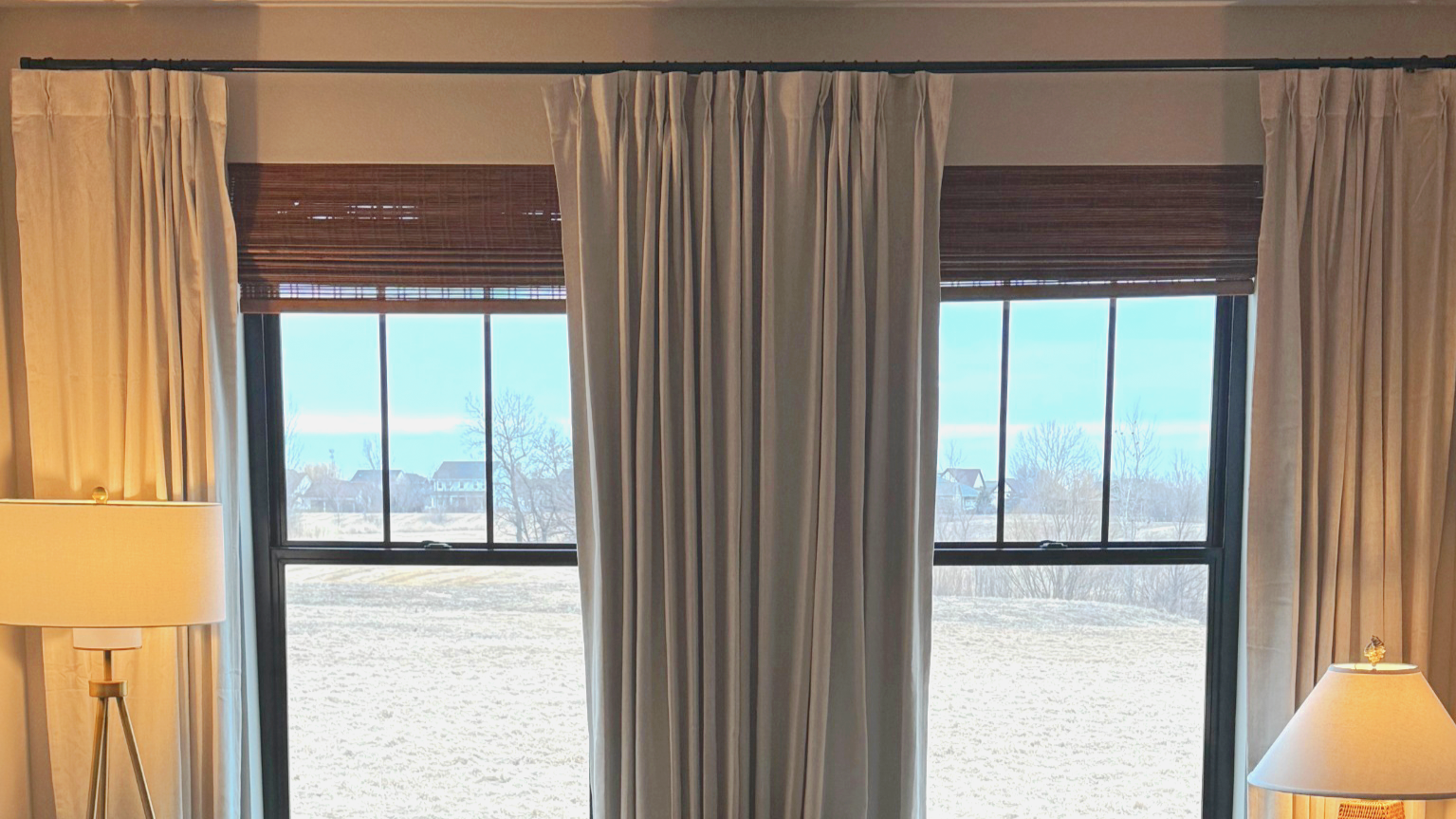
1. Start with the curtain length, then determine your rod height
In general, I like to hang curtains about a foot above the window. It helps draw the eye upward and gives the window a more substantial presence in the room.
But here's something I always consider when using ready-made curtains: the lengths that are actually available to purchase.
If you're not ordering custom drapery, you're working with predetermined lengths. So before deciding exactly where to mount the rod, look at the panel options and figure out which length will work best in your space.
You can absolutely buy longer panels and have them hemmed, but that's an additional expense worth factoring into your decision.
My preference is for curtains that just meet the floor, without a large gap underneath or excessive fabric pooling at the bottom.
And remember, your hanging hardware matters. Rings, hooks, and the curtain header can all affect the finished drop, so account for those details before drilling anything.
2. Hang your curtains wider than the window
This is the other half of the high and wide concept, and it's just as important.
I want curtains to have room to stack back on either side of the window when they're open. That helps keep the glass uncovered and makes the whole arrangement feel more generous.
How wide I go depends on the window and the surrounding wall.
For a smaller window with plenty of wall space, I'll often extend the rod about 8–10 inches beyond the window on each side.
For larger windows, I might go 12–16 inches beyond each side.
And if the windows occupy a large portion of the wall, I sometimes prefer to treat the entire wall as one composition and extend the drapery across it.
These aren't rigid measurements. I'm looking at the proportions of the wall, how the curtains will stack, and what feels right for the room.
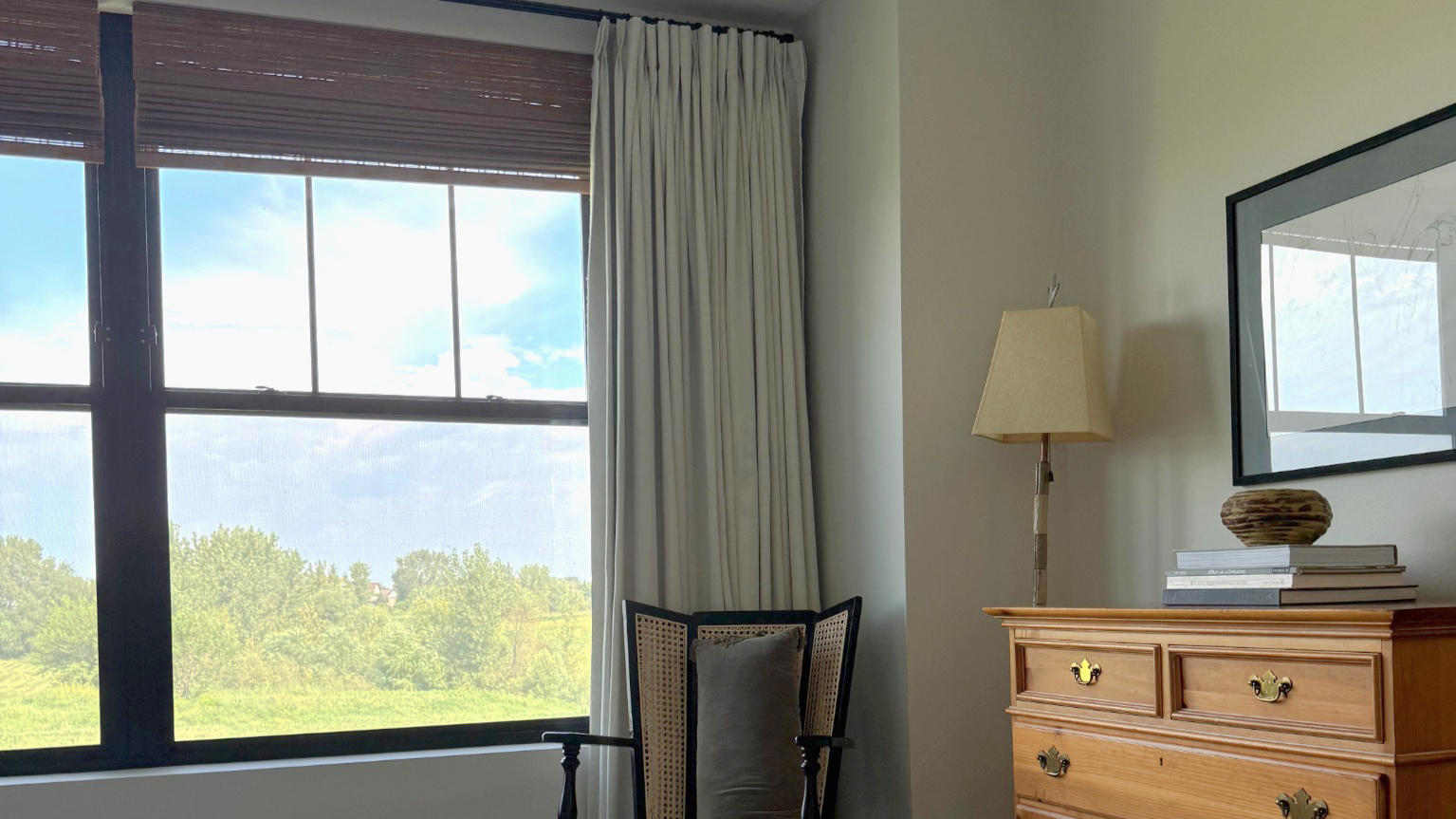
3. Don't underestimate how much fabric you need
This might be the most overlooked part of choosing curtains.
You can get the height and width of your rod exactly right, but if you don't have enough fabric, the curtains can still look skimpy.
Here's how I calculate fullness for ready-made panels:
Curtain rod width × 1.5 to 2 = total curtain fabric width
Then divide that total in half to determine how much fabric you need on each side.
For example, if your curtain rod is 100 inches wide:
At 1.5x fullness, you'd want approximately 150 inches of fabric total, or 75 inches per side.
At 2x fullness, you'd want approximately 200 inches total, or 100 inches per side.
I generally lean toward the fuller end of that range.
I like curtains to look generous when they're open and still have beautiful folds when they're pulled closed. This is especially important in bedrooms, where you want enough fabric to cover the window without pulling everything completely flat.
Keep in mind that some pleated curtain styles have different fabric and finished-width measurements, so be sure you're calculating based on the manufacturer's specifications.
4. The hardware and finishing details matter
One of the things that makes a big difference with ready-made curtains is how you hang them.
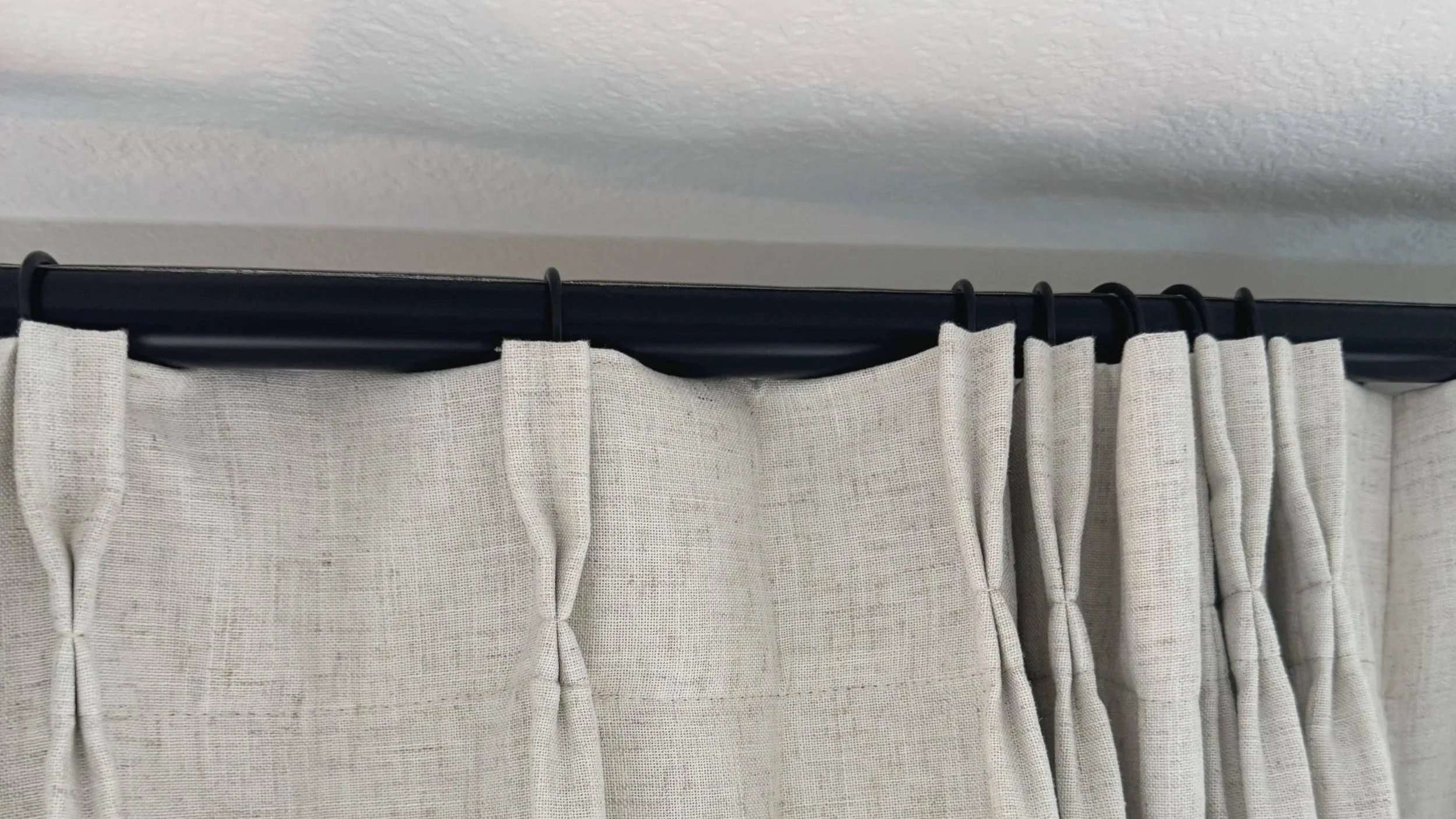
Throughout our home, I've used the same linen-blend blackout panels from Amazon, paired with curtain hooks and rings to achieve that tailored, pinch-pleat look.
And here's one of my favorite little details: glide tape.
I applied it along the top of our curtain rods so the rings slide smoothly and quietly when we open and close the curtains. It's a small addition, but especially in bedrooms where you're using the curtains every day, it makes them much nicer to operate.
These are the kinds of details I pay attention to when planning window treatments. The curtains should look beautiful, of course, but I also want them to function well.
5. Consider how you actually use the room
Before finalizing any window treatment, think about what you need it to do.
In a living room, you might primarily want softness, texture, and the ability to filter light.
In a bedroom, privacy and light control may be much more important.
If you're using blackout curtains, for example, hanging the rod high and wide can help reduce light leaking around the edges. Layering curtains with a blackout shade can provide even better coverage.
In our bedrooms, I used blackout panels because I wanted the rooms to feel comfortable for sleeping. In one room, I paired them with woven shades for additional light control. In the other, I extended the drapery across nearly the entire wall, which helps minimize light coming in around the sides.
And don't forget to consider nearby furniture, heating vents, and anything else that could interfere with the curtains hanging properly.
The curtains in my home
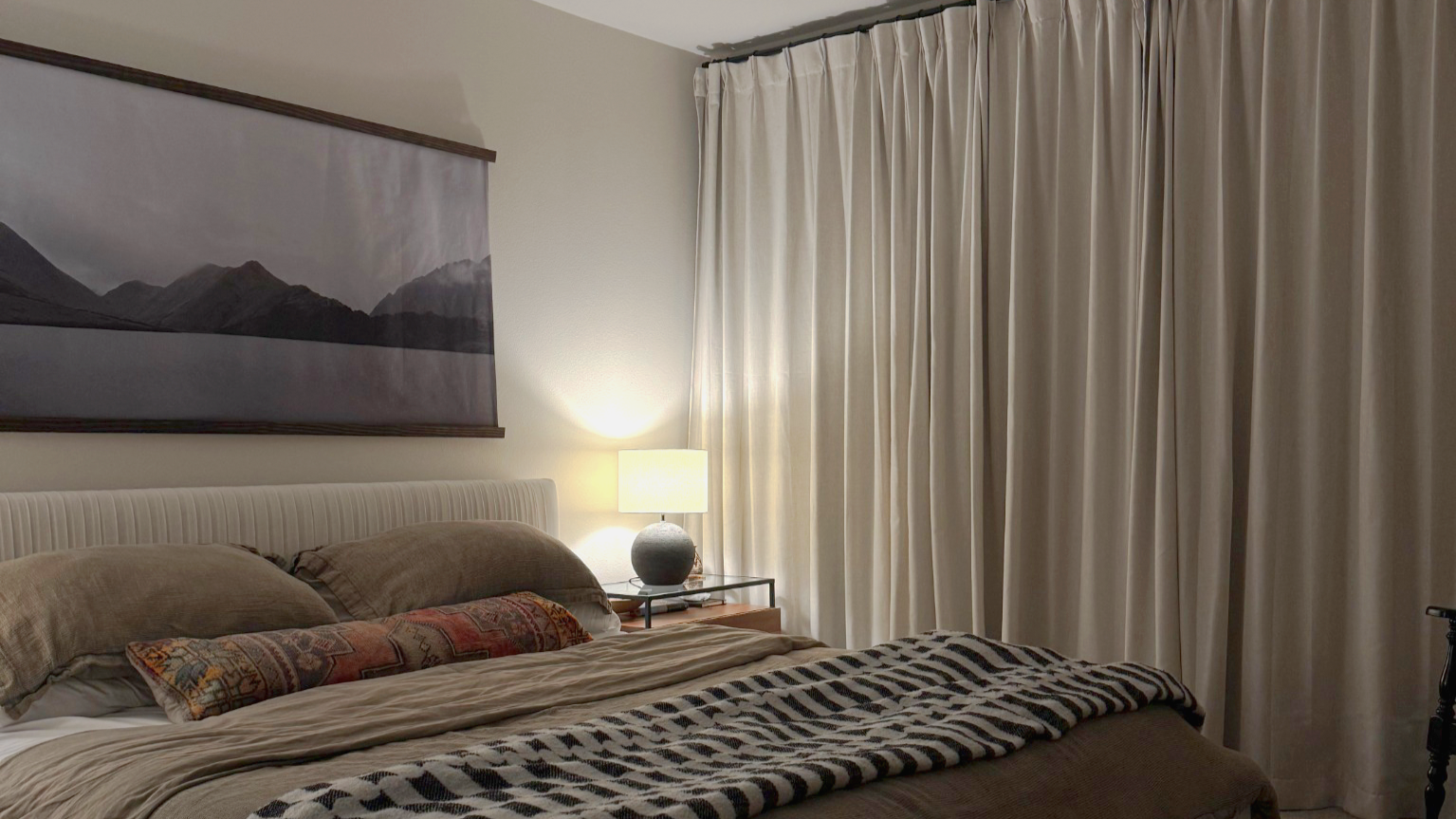
I love how much curtains can change the feel of a room. They add softness, help balance the proportions of the windows, and can make a space feel much more finished.
For my own home, I chose ready-made pinch-pleat panels and paid particular attention to their fullness, the placement of the rod, and the finishing hardware.
If you're curious about the pieces I used, I've linked them below.
Shop my curtain setup:
Some links may be affiliate links, which means I may earn a small commission at no additional cost to you.
A final thought
Good window treatments require a little planning, especially when you're working with ready-made panels.
Before purchasing anything, consider the proportions of your windows, the available curtain lengths, the amount of fabric you'll need, and how everything will function once it's installed.
A few thoughtful decisions at the beginning can make a significant difference in the finished room.